
![BUSY SEASON Christy Loewen, pictured left, and Eric Gajar, pictured right, read an application for the next year. “A lot of people ask, what does it take to be admitted?” said Gajar. “We are first and foremost a college prep school, so we want people who can handle that, but [who] also are good citizens to have as a part of the community.”](https://greenhillsalcove.com/wp-content/uploads/2026/02/image.jpg)

![BE OUR GUEST Greg Huntoon performed as Gaston in the Burns Park Players’ community production of “Beauty and the Beast,” in 2023. “[When] you are somewhere else in the world, and [someone] says, ‘Oh my gosh you were Gaston,’ It's funny,” said Greg.](https://greenhillsalcove.com/wp-content/uploads/2026/01/Screenshot-2026-01-09-at-11.10.29-AM.png)




Sweat beads on his temple and drips into his mask, unaware of the anxious vibrations in his arms and the heavy breathing echoed by the mesh sheathing the front of his face. He takes the chance and lunges towards his opponent, unsure whether he made the right decision and blindly trusting the feeling in his gut that repeated the chant: Do it, do it, do it.
When most high school students think of sports, the classics come to mind: soccer, basketball, and football. But for Reyansh Tagore ’27, it is fencing, a sport with deep history, niche appeal, and personal meaning.
“I’ve been fencing for a few years now and I really enjoy it,” Tagore said. “My proudest achievement so far has been qualifying for and competing in the Junior Olympics, a milestone for any young fencer.”
Tagore first became interested in fencing after seeing it and deciding to give it a try. What started as curiosity has grown into a four-year commitment that continues to shape his focus and discipline. His mother, Sanjana Tagore, has watched that transformation firsthand.
“Fencing has really helped Reyansh develop patience and resilience,” she said. “It is not just about winning matches; it is about learning to think strategically and stay calm under pressure. Watching him compete makes me so proud because I can see how much effort and heart he puts into every match. Even when he loses, he reflects on what went wrong and works harder the next time.”
Those qualities have not gone unnoticed by his peers. Not only his friends, but his classmates have also caught on to the dedication and perseverance that Tagore has when it comes to the sport.
“Everything he does is precise and he executes his tasks very specifically because of fencing,” said classmate Derric Scott ’27. “He has been talking about it forever because it is really something he enjoys, and he is always trying to learn something new about it.” Scott describes Tagore as “methodical and serious about the sport” but also someone who “carries those same qualities into the classroom as a leader while still being able to smile and crack a joke.”
But fencing comes with unique challenges beyond the bouts themselves. Because it is not a common high school sport, practice and competitions take place outside of school, making scheduling difficult.
“Recently he has been focusing more on fencing and is competing on a higher level,” Luo said. “Back when we were on the tennis team together, he used to come to practice exhausted from fencing, whether it was a tournament or a long practice. It’s one of his top priorities.”
Luo, who has learned about fencing’s complexity from Tagore, admires the way his friend manages its many moving parts.
“There’s a lot to consider because you have to worry about parrying, your footwork, moving around, and mannerisms,” he said.
Even when balancing fencing with the pressures of high school academics tempted him to quit, Tagore found ways to persevere.
“As high school got harder and harder, it has been difficult to keep up with fencing along with academics, ” Tagore said. “I got close to quitting but pushed through,”
For Scott, that balance also shows up in the way Tagore relates to others. On the mat, he said Tagore is “very formal, all business, with limited conversations.” But off the mat, he is friendly like most fencers, since “they all have the same goal and they take it the same way.”
Fencing has also given Tagore a sense of community.
“Fencing is a small community, so most fencers know each other. Everyone is pretty friendly. Even if you go against each other, you are still going to be friends,” he said.
When he does encounter hostile or aggressive competitors, Tagore has a unique approach at dealing with them.
“You can’t let rude people get in your head or else it will ruin your performance and put you in a bad mood, ” Tagore said.“I’ve learned to just ignore them.”
Looking ahead, Tagore is keeping his options open. He hopes to fence in college but acknowledges the reality: only highly selective schools have strong fencing programs.
“It is not something you can do at school, so scheduling is hard because it is after school,” Tagore said. “On top of that, fencing does not always open doors in the same way as more traditional sports. A lot of colleges do not have fencing teams, so it doesn’t benefit me much. Sometimes it feels like it might be pointless, but I still enjoy it, so it evens out.”
His friend, Desmond Luo ‘27, also sees the possibility.
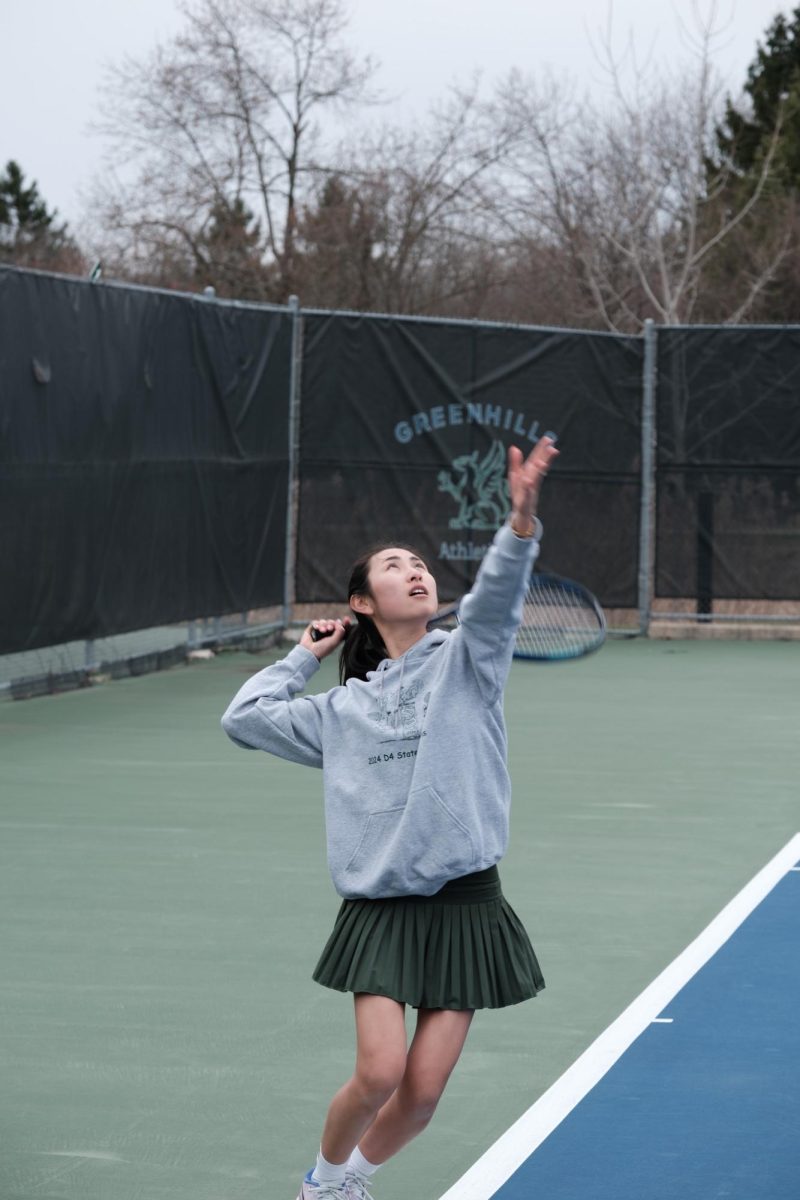
“It is viable for him to pursue it, maybe not as a main path, but definitely as a hobby,” Luo said. If fencing doesn’t work out in the future, Tagore can see himself returning to tennis, another sport he enjoys for its balance of competitiveness, movement, and aggression.
For now, Tagore remains dedicated to fencing, a sport that may not be mainstream but has given him perseverance, community, and joy, and to his friends and family, a clear passion that defines who he is.
“Even though it gets hard at times, I really love to fence and I hope that I can continue it for as long as I can,” Tagore said.