
![BUSY SEASON Christy Loewen, pictured left, and Eric Gajar, pictured right, read an application for the next year. “A lot of people ask, what does it take to be admitted?” said Gajar. “We are first and foremost a college prep school, so we want people who can handle that, but [who] also are good citizens to have as a part of the community.”](https://greenhillsalcove.com/wp-content/uploads/2026/02/image.jpg)

![BE OUR GUEST Greg Huntoon performed as Gaston in the Burns Park Players’ community production of “Beauty and the Beast,” in 2023. “[When] you are somewhere else in the world, and [someone] says, ‘Oh my gosh you were Gaston,’ It's funny,” said Greg.](https://greenhillsalcove.com/wp-content/uploads/2026/01/Screenshot-2026-01-09-at-11.10.29-AM.png)
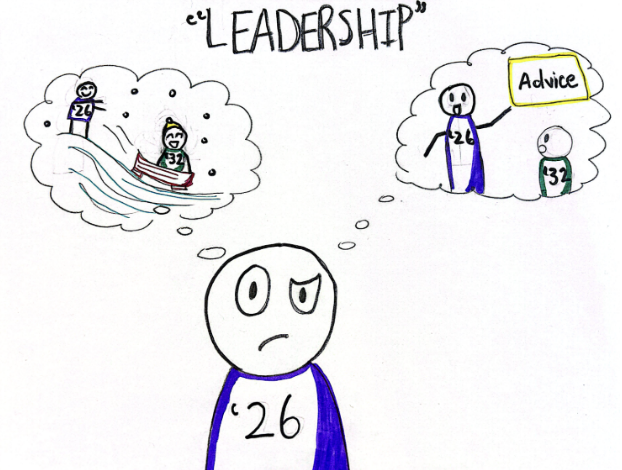
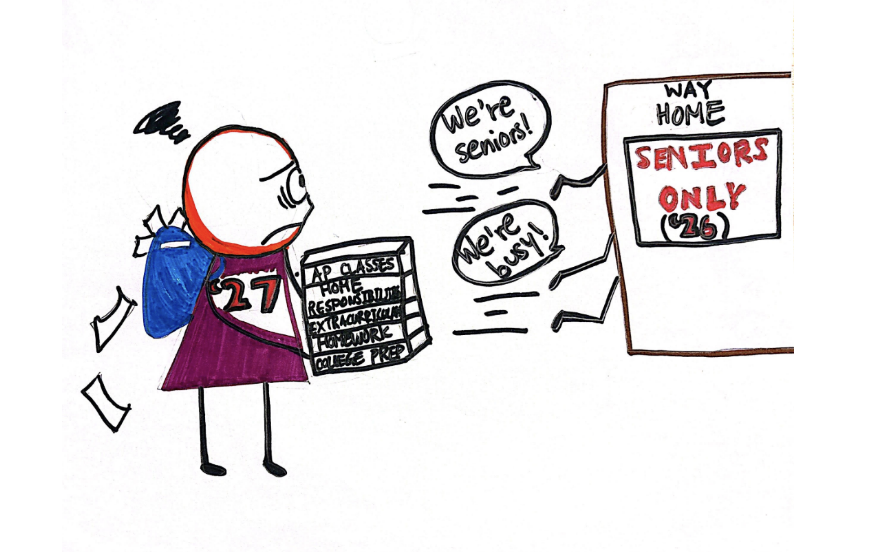

We are often told that senior year is supposed to be the year we step up. The year we become role models. As a result, the officially chosen theme of senior year is leadership and legacy. But what does leadership exactly look like? Is it standing in front of others and giving a speech? Is it initiating and organizing change? Taking responsibility when things get difficult? Or is it being assigned a buddy and spending the day playing games, doing scavenger hunts and sledding? For Greenhills, the latter seems to be the more agreeable definition, as evident through the Seniors Buddy Program. And while the idea behind it is undeniably fun and well-intentioned, I’ve found myself questioning whether it truly develops leadership in the way it claims to. From my own experience, it often feels less like an opportunity to lead and more like an opportunity to simply participate and an enjoyable way to pass time.
When I first heard about the Senior Buddy Program, I was undeniably excited and expected something meaningful and worth remembering in my senior year. Something that would actually challenge me as a senior and push me to grow into the role our school wants us to step into. After all, we’re constantly told that senior year is about leadership: setting an example, leaving a legacy, and being someone younger students can look up to. So when I read the official description of the program, that it’s meant to help us “hone our leadership skills” and create memories that “frame the sixth grade experience,” I assumed it would be a chance for seniors to step into real responsibility.
But after participating in it, I can honestly say that I haven’t experienced it that way. For me, the Senior Buddy Program doesn’t feel like leadership. It’s just very fun—I find it energizing and an extremely entertaining way to pass the time and socialize. The activities are engaging, the buddies are bubbly, and at its core, the program is a fun break from the usual routine. It’s lighthearted, social, and genuinely amusing. I am always charmed by the liveliness the program brings to the table for all of us and it’s a great memory to cherish for my final year in this school.
But this is also exactly my issue.
Based on these impressions, the program doesn’t necessarily fit the image of “leadership” I was promised based on the description. To me, this program feels less like an opportunity to develop leadership and more like an occasional hangout session that the school labels as something bigger. I don’t feel like I’m “honing” anything. I feel like I’m just there to have fun with adorable buddies. I show up, I participate in playful activities, I make conversation, and I have lots of fun. It’s not that those are bad things — but I don’t see how they qualify as meaningful leadership. The program seems to confuse leadership with simply spending time with younger, less experienced students.
When I think of leadership, I think of setting an example, giving advice, and showing responsibility. I think of solving others’ problems, being challenged, and learning how to guide others through something that important matters. Leadership is stepping up when something is difficult or uncertain — not exactly participating in various light-hearted activities and simply having fun with those who we should be leading. Personally, I haven’t walked away from a buddy meeting thinking, “I really developed as a leader today,” I’ve walked away thinking, “that was so fun,”
Even so, I’ve always thought the program could have real potential. The idea of connecting seniors with sixth graders is an intriguing idea that allows for growth, creative ideas, and the demonstrating the kind of leadership that is both helpful and engaging—all the factors that the program presented itself to be. Sixth graders are just beginning to experience Greenhills, and having an older student to talk to and learn from could genuinely make a meaningful difference. Moreover, both parties have the advantage of learning about leadership—the sixth graders from their senior buddies, and the seniors from posing as a helpful example. But the way the program is currently structured doesn’t allow that connection. Instead of giving seniors a real role in mentoring or guiding younger students, it mostly gives us activities to do with them. We’re creating memories — but not necessarily making an impact.
If the goal truly is to help seniors develop leadership skills, then I believe the program could be structured in a way that asks more of us. Instead of primarily organizing activity-based hangouts with the buddies, the program could include intentional mentorship aspects built into each meeting. For example, seniors could be paired with their buddies for some structured academic check-ins once a month, where we could help answer questions about assignments, talk through study strategies, and share how we’ve learned to manage heavy workloads, balance extracurricular commitments, and organize our time effectively. Rather than simply hanging out and playing games, we could guide the sixth graders through skills that will actually support them as they move through middle school.
The program could also include small-group discussions led by seniors about topics that matter to sixth graders: how they are currently adjusting to the school environment, navigating friendships, handling academic pressure, or getting involved in different clubs and sports. Because they are still relatively new to Greenhills, we, as seniors could go more in-depth in these discussions to talk through what to expect in the future, what the school expects of them, and why they belong here. Seniors could prepare short conversation outlines and facilitate meaningful interactions with their buddies and therefore bond with them while simultaneously advising them. Another idea could be structured Q&A sessions where sixth graders could ask questions about upper school life—about classes, workload, social transitions, how much or little your life will change once they get there, and even mistakes we’ve learned from. That would require seniors to reflect honestly on their own experiences and show vulnerability, responsibility, and perspective, which are key qualities that closely resemble true leadership.
Even incorporating a collaborative project, such as seniors and sixth graders working together on a small service initiative or school improvement idea, would create opportunities for planning, cooperation, and follow-through. That kind of experience would challenge seniors to take ownership while teaching the sixth graders what leadership looks like in action as well as the value of teamwork alongside their mentor figures.
After that, we could allow room for all the fun activities for a well-deserved break, as I don’t think the program needs to lose the fun elements entirely. But I do think it could shift from being activity-centered to mentorship-centered, so that leadership is practiced intentionally rather than assumed automatically.
I also don’t think the Senior Buddy Program is pointless. In fact, I still want it to be around; I just want it to aim for a slightly more meaningful change and to not be misleading, as in being presented as something that shapes seniors into leaders, when in my experience, it doesn’t really do that, and is mostly fun, social session with younger students—there’s nothing wrong with having fun. But I don’t think fun should be confused with leadership.
When I recount all the times I have presented myself as a leader in my senior year, I wouldn’t exactly want to remember that one of my major “leadership” opportunities I participated in as a senior was essentially playing games with sixth graders. I want my leadership experiences to feel real. I want them to mean something. I want them to challenge me, not just entertain me.
So while I respect the intention behind the Senior Buddy Program, and enjoy it immensely, I believe it could change for the better and include more of those leadership opportunities for the curious sixth graders. The lighthearted activities can be kept for fun, but allowing for more chances for us as seniors to actually lead our buddies would improve the program greatly—a necessary change that is both fun and meaningful learning opportunity for future leaders in development.